April 1, 2026Dan Rodney/4 min read

Customizing the Interface: Panels & Workspaces

Master Interface Customization for Enhanced Workflow Efficiency

Key Interface Customization Benefits

Reduced Screen Clutter

Collapse panels to icons when not actively needed. This creates more working space while keeping tools accessible through simple clicks.

Personalized Layout

Arrange panels according to your workflow needs. Place frequently used tools in prime locations for faster access and improved productivity.

Workspace Consistency

Save custom arrangements as workspaces to maintain consistent setups across projects. Switch between different workspace configurations instantly.

Customizing the Interface: Panels & Workspaces

Efficient interface management is crucial for professional productivity in InCopy. By strategically expanding or collapsing panels, you can eliminate screen clutter while maintaining quick access to essential tools. This streamlined approach allows you to focus on content creation rather than wrestling with interface elements.

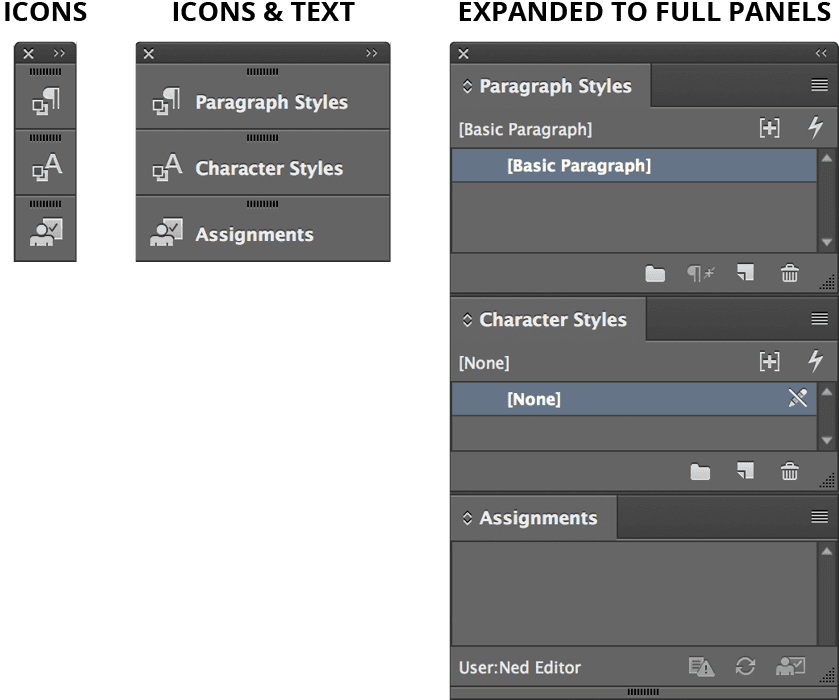
panels display options

Toggling the Panel Dock Between the Full Panel & Icons

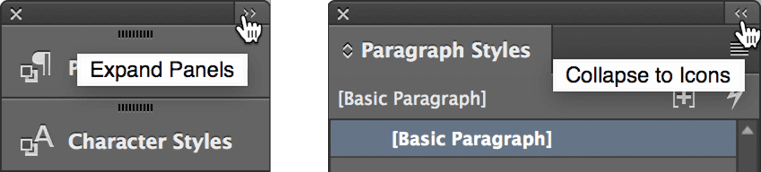
The panel dock's dual-state system gives you maximum flexibility in screen real estate management. Click the double-arrow button at the top right of the panel dock to seamlessly transition between expanded panels (revealing full functionality and content) and collapsed icon mode (preserving workspace while maintaining accessibility). This toggle becomes particularly valuable when working on smaller screens or managing complex documents that demand maximum viewing area.

panels expand and collapse

Panel Dock Toggle Process

1

Locate Toggle Button

Find the button positioned at the top right corner of the panel dock area

2

Click to Expand

Click the button to expand collapsed panels and view their full content and options

3

Click to Collapse

Click again to collapse panels back to icon-only view for maximum screen real estate

Reordering Docked Panels

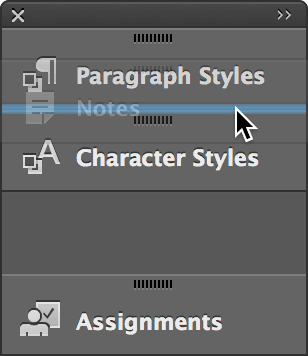
Customize your workflow by arranging panels according to your usage patterns and project requirements. Simply drag any panel's icon or name vertically within the dock—the blue insertion line provides precise positioning feedback, ensuring your panels land exactly where intended. Consider placing your most frequently accessed panels at the top for optimal efficiency, particularly when working under tight editorial deadlines.

panels reorder

Understanding the fundamentals of panel docking transforms your workspace from a default configuration into a personalized command center. The following techniques will help you establish an interface that supports your specific editorial workflow.

Visual Feedback During Reordering

Watch for the blue line indicator that appears while dragging panels. This line shows exactly where the panel will be positioned when you release the mouse, ensuring precise placement in your desired order.

Panel Reordering Best Practices

0/3

Docking Panels to the Side of the Screen

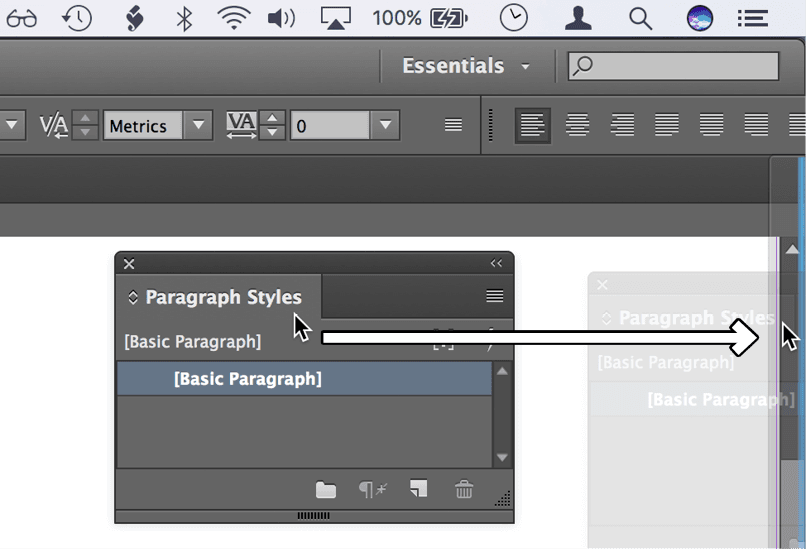
Strategic panel docking creates a consistent, accessible workspace that adapts to your content creation needs. While panels typically dock to the right side of the screen (following standard design application conventions), you can position them on either side based on your monitor setup and workflow preferences. Once you establish the initial dock, expanding your panel collection becomes intuitive.

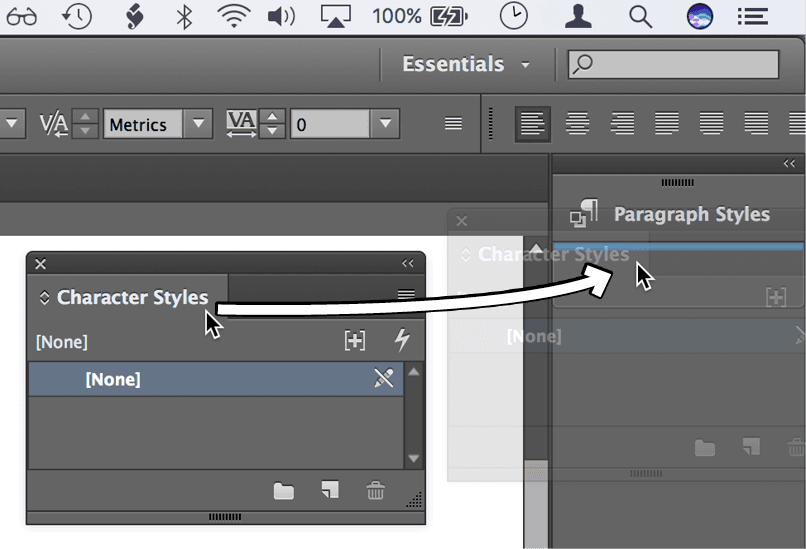
  1. When establishing your first docked panel, drag the panel's tab toward the right edge of your screen. Watch for the dark band indicator—this visual cue confirms InCopy recognizes your docking intention. Release the mouse when the band appears to lock the panel in position.

    dock 1st panel

  2. Adding subsequent panels requires simply dragging them into the established docked area. The interface intelligently accommodates additional panels, automatically organizing them within the dock structure. This modular approach allows you to build a comprehensive toolkit without sacrificing workspace organization.

    dock 2nd panel

Initial Panel Docking Process

1

Select Panel Tab

Click and hold the panel's tab that you want to dock to the screen edge

2

Drag to Screen Side

Move the panel tab to the right side of the screen until a dark band indicator appears

3

Release to Dock

Release the mouse button when the dark band appears to complete the docking process

Adding Additional Panels

Once you have established an initial docked area, additional panels can be easily added by simply dragging them into the existing docked space. This creates a consolidated panel workspace.

Undocking Panels

Flexibility remains paramount when working with complex documents or collaborative projects that may require temporary interface adjustments. To liberate a panel from the dock, simply drag its icon, name, or tab away from the docked area and release it in your main workspace. This creates a floating panel that can be positioned anywhere on your screen, ideal for temporary focused work or multi-monitor setups.

The true power of interface customization lies in your ability to save and recall these configurations. Workspaces provide the foundation for consistent, efficient editorial environments across projects and collaborations.

Panel Undocking Method

1

Select Panel Element

Click and drag the panel's icon, name, or tab from the docked area

2

Move to Center Screen

Drag the panel away from the dock toward the middle area of the screen

3

Release to Float

Release the mouse button anywhere in the center area to create a floating panel

Saving a Workspace

Professional workflows demand consistency and reliability. After investing time in perfecting your panel arrangements, toolbar positions, and interface preferences, preserve these configurations as custom workspaces. This insurance policy protects your productivity setup against accidental changes or software resets, ensuring you can instantly return to your optimized environment regardless of circumstances.

  1. Navigate to Window > Workspace > New Workspace.

  2. Assign a descriptive name that reflects the workspace's purpose (such as "Editorial Review" or "Final Proofing") and click OK.

Workspace Recovery Feature

Saving workspaces provides a safety net for interface customization. Even if panels get accidentally rearranged or disrupted, loading a saved workspace instantly restores your preferred layout configuration.

Workspace Saving Process

1

Arrange Interface

Position all toolbars and panels exactly as you want them for your workflow

2

Access Workspace Menu

Navigate to Window menu, then select Workspace, followed by New Workspace option

3

Name and Save

Enter a descriptive name for your workspace configuration and click OK to save

Loading a Workspace

Workspace management becomes particularly valuable when transitioning between different types of editorial work or collaborating with teams that have established interface standards. Whether you're switching from content creation to review mode or adapting to organizational preferences, saved workspaces provide instant environment transformation.

  1. Access Window > Workspace and select your desired configuration, such as Essentials for general editing or any custom workspace you've created.

  2. The interface immediately reorganizes according to your selected workspace specifications, repositioning panels, adjusting visibility settings, and restoring your preferred arrangement. This transformation supports seamless transitions between different editorial phases or project requirements.

    NOTE: InCopy intelligently remembers workspace modifications, automatically saving adjustments you make during active sessions. If you need to revert to the original saved configuration—perhaps after experimental changes or collaborative adjustments—simply choose Window > Workspace > Reset [workspace name] to restore the pristine saved state.

Workspace Loading Behavior

Pros
Instantly arranges panels according to saved configuration
Remembers previous customizations and modifications
Shows and hides panels based on workspace settings
Provides quick switching between different layout setups
Cons
May override current panel arrangements without warning
Customizations persist and modify original workspace settings
Requires reset command to return to original saved state
Workspace Reset Requirement

Workspaces remember your customizations and reload in their modified state. To return to the original saved configuration, you must choose Window > Workspace > Reset [workspace name] to restore the initial settings.

Key Takeaways

1Panel docks can be toggled between full view and icon-only mode using the button at the top right of the dock area
2Panels can be reordered by dragging their icons or names up and down, with a blue line indicating the final position
3New panel docks are created by dragging panel tabs to screen edges until a dark band appears, then releasing
4Additional panels can be easily added to existing docked areas by dragging them into the established dock space
5Panels are undocked by dragging their icon, name, or tab from the dock to the middle of the screen
6Custom interface arrangements can be preserved by saving workspaces through Window > Workspace > New Workspace
7Saved workspaces can be loaded from Window > Workspace menu to instantly restore panel configurations
8Workspaces remember modifications and require the Reset command to return to original saved settings

RELATED ARTICLES