April 1, 2026Bob Umlas/4 min read

Protection in Excel

Master Excel Security Features and Data Protection

Key Protection Concept

All cells in new Excel files are locked by default, but this locking only takes effect once worksheet protection is enabled through the Review tab.

Excel Protection Levels

Worksheet Protection

Controls cell editing and specific features within a single worksheet. Allows granular control over what users can modify.

Workbook Protection

Protects the structure of the entire workbook. Prevents adding, deleting, or renaming worksheets to maintain workbook integrity.

Excel Protection

Here's a counterintuitive Excel fact that surprises many users: in every new Excel file, all cells are automatically locked. However, this default locking remains dormant until you actively protect the worksheet. This design allows you to strategically control which cells users can modify while safeguarding your formulas, formatting, and critical data.

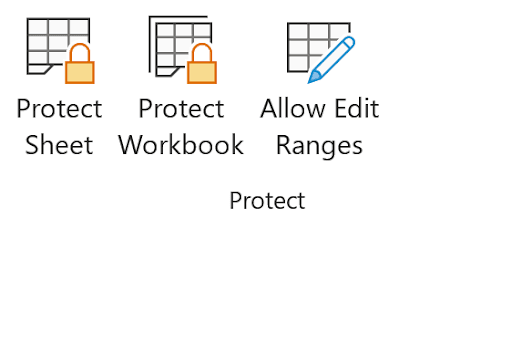
To activate worksheet protection, navigate to the Review tab on the ribbon. In the right section of this tab, you'll find the protection controls:

Yousee

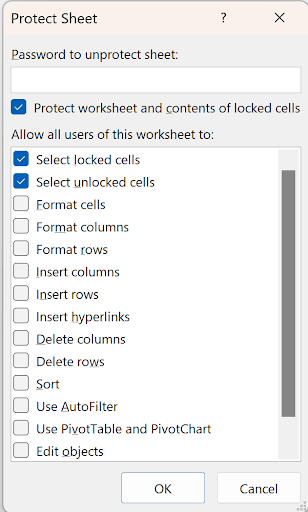
When you click "Protect Sheet," Excel presents a comprehensive dialog box with multiple configuration options:

This Dialogue

This dialog contains numerous permission settings, with additional options available by scrolling down. With the default selections allowing users to select both locked and unlocked cells, the protection might seem ineffective at first glance. The real impact becomes apparent when users attempt to edit any cell—they'll encounter Excel's protection barrier:

Cell

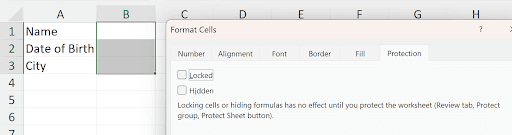
The key to effective worksheet protection lies in strategic preparation. Before enabling protection, you must unlock any cells that users should be able to modify. This is particularly crucial when designing forms, data entry templates, or collaborative worksheets. Consider this practical example:

Illustration

To unlock specific cells, select your target range and press Ctrl+1 to open the Format Cells dialog. Navigate to the Protection tab and uncheck the "Locked" checkbox. Once you apply worksheet protection, users will only be able to enter data in these designated cells (B1:B3 in our example). This approach ensures that your labels, formulas, and formatting remain intact while providing controlled input areas.

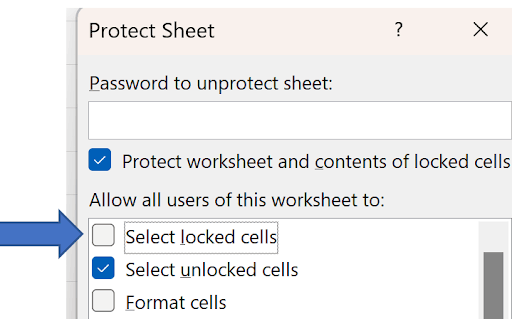
For an enhanced user experience, consider unchecking "Select Locked Cells" in the protection dialog:

Sheet D

This configuration restricts user interaction to only the editable areas, creating a more intuitive and focused data entry experience. Users won't accidentally click on protected cells, reducing confusion and improving workflow efficiency.

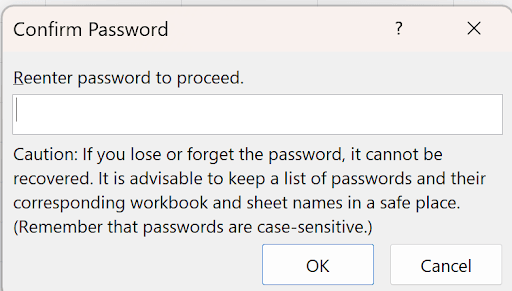
While basic protection prevents accidental changes, any determined user can easily bypass worksheet protection by right-clicking and selecting "Unprotect Sheet." To create meaningful security, you must implement password protection. Choose a password you'll remember—Excel will prompt you to confirm it for accuracy:

Reenter

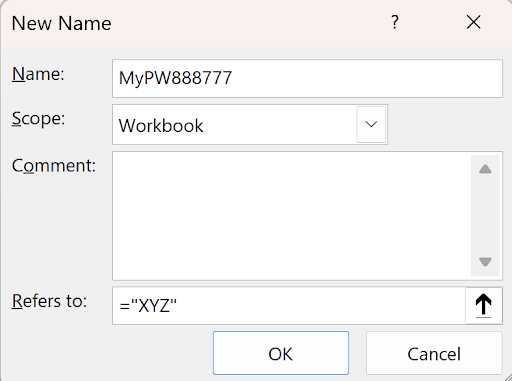
Here's a professional technique for password management that eliminates the risk of forgotten passwords while maintaining security. Create a defined name in every password-protected workbook—something memorable like "MyPW" or a more cryptic variation like "MyPW888777." This named range will store your password as its value:

Like This

To enhance security, you can hide this named range from casual view. Access the VBA immediate window (press Ctrl+G within the VBA editor) and execute this command:

Names("Mypw888777").Visible=False

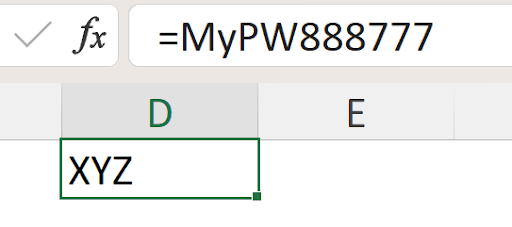
Once hidden, the name won't appear in Excel's name dropdown or defined names list. However, you can still retrieve your password by typing the name directly into any cell:

Password

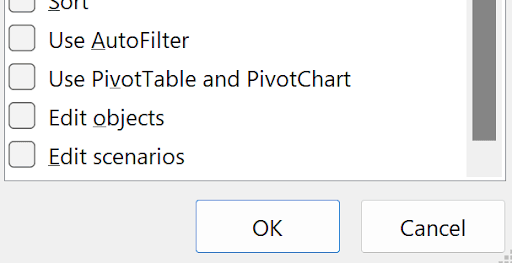
The protection dialog offers granular control over user permissions. When you scroll through the complete list of available options, you'll discover extensive customization possibilities:

Expanded List

Notably, the expanded list reveals only one additional option: "Edit scenarios." This seems like an oversight in Microsoft's interface design—this option could easily fit in the main dialog. Each checked item in this list remains available to users even when the sheet is protected, allowing you to balance security with functionality based on your specific requirements.

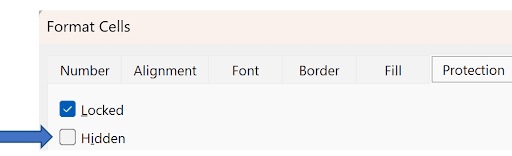
Professional best practice dictates that all formulas should remain protected to prevent accidental corruption of calculations. Excel provides an additional layer of protection through the "Hidden" checkbox in the Format Cells dialog:

Convene

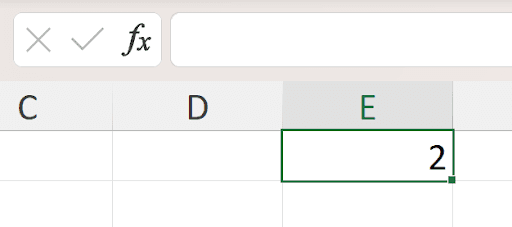
When a cell is marked as hidden and the worksheet is protected, its formula or contents become invisible in the formula bar when selected. This is particularly valuable for protecting proprietary calculations or sensitive formulas. Here's an example of a hidden cell containing the formula =1+1:

Hidden

Users can see the calculated result but cannot view or reverse-engineer the underlying formula. This feature proves invaluable when distributing templates containing proprietary business logic or complex calculations that represent competitive advantages.

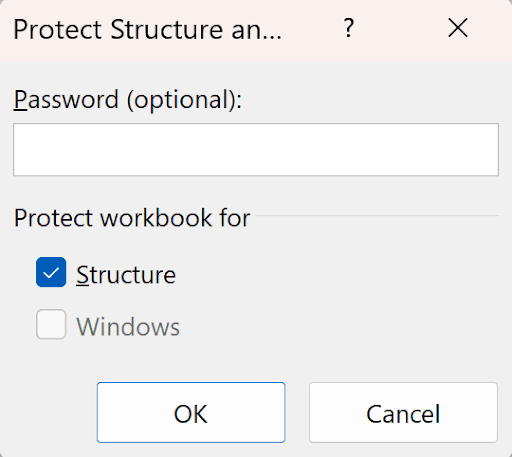
Workbook protection operates at a higher level than worksheet protection and serves different purposes. When you select "Protect Workbook," you'll encounter this streamlined dialog:

See

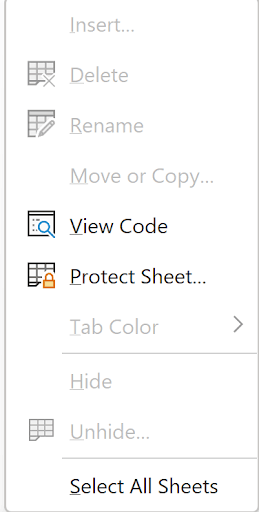
The "Structure" checkbox is the primary control here—the "Windows" option remains from earlier Excel versions and is no longer functional in modern Excel. When structure protection is active, users cannot add, delete, rename, move, hide, or unhide worksheets. This becomes evident when examining the disabled options in the worksheet tab's right-click menu:

Disabled

Workbook protection proves essential in several scenarios: when your VBA macros reference specific sheet names and cannot tolerate user modifications, when you've created a carefully designed multi-sheet application, or when you need to maintain a consistent structure for reporting or analysis purposes. This level of protection ensures that your workbook's architecture remains intact while still allowing data entry and manipulation within individual worksheets.

Setting Up Cell Protection

1

Unlock Input Cells

Select cells where users need to enter data, press Ctrl+1, go to Protection tab, and uncheck the Locked checkbox before protecting the worksheet.

2

Access Protection Settings

Navigate to the Review tab on the ribbon and locate the Protect Sheet option in the right section to configure protection settings.

3

Configure User Permissions

Choose which actions users can perform, such as selecting locked/unlocked cells, formatting cells, or inserting rows and columns.

4

Set Password Protection

Add a password to prevent unauthorized users from unprotecting the worksheet and modifying your protection settings.

Allowing Selection of Locked Cells

Pros
Users can navigate through all cells normally
Maintains familiar Excel navigation experience
Allows users to view protected formulas and data
Cons
May confuse users about which cells are editable
Could lead to attempted edits in protected areas
Less clear user interface for data entry forms
Password Management Strategy

Create a hidden named range like MyPW888777 containing your password. Use VBA to hide it with Names("MyPW888777").Visible=False, then reference it when needed without forgetting your password.

Cell Visibility Options

FeatureLocked OnlyLocked + Hidden
Cell Content DisplayShows formulas in formula barHides formulas completely
Result VisibilityShows calculated resultsShows calculated results
Security LevelBasic protectionEnhanced protection
User ExperienceTransparent formulasClean interface
Recommended: Use Hidden attribute for proprietary formulas while keeping basic protection for general data cells.

Worksheet Protection Checklist

0/6
Workbook Structure Protection

When protecting workbook structure, users cannot add, delete, rename, hide, or modify worksheets. This is essential for VBA applications that depend on specific sheet names and structures.

Key Takeaways

1All Excel cells are locked by default, but locking only activates when worksheet protection is enabled through the Review tab
2Unlock specific cells before protecting worksheets to allow user data entry in designated areas only
3Disable locked cell selection in forms to guide users directly to input fields and improve user experience
4Use password protection to prevent unauthorized users from removing worksheet protection and modifying settings
5Create hidden named ranges containing passwords as a secure method to remember protection passwords without external documentation
6Mark cells as Hidden in addition to Locked to completely conceal formulas and calculations while still displaying results
7Workbook protection differs from worksheet protection by controlling structural elements like adding, deleting, or renaming sheets
8Configure specific feature permissions in the protection dialog to balance user functionality with security requirements

RELATED ARTICLES