SQL MIN Tutorial
Master SQL MIN function for effective data analysis
The MIN function is one of SQL's core aggregate functions, designed to analyze and summarize data across multiple rows to return a single meaningful result.
Common MIN Function Use Cases
Financial Analysis
Find the lowest salary, minimum transaction amount, or smallest budget allocation across departments or time periods.
Performance Metrics
Identify minimum performance scores, lowest sales figures, or smallest completion times for optimization analysis.
Quality Control
Determine minimum acceptable standards, lowest ratings, or smallest measurements for quality assurance processes.
MIN Function Implementation Steps
Identify Target Column
Determine which numeric or date column contains the values you want to find the minimum for in your dataset.
Write SELECT Statement
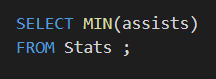
Use the SELECT keyword followed by MIN function with your chosen column as the parameter.
Specify Source Table
Add the FROM clause to indicate which table contains the data you want to analyze.
Execute and Review
Run the query and verify the returned minimum value matches your expectations for the dataset.
The MIN function works with numeric, date, and even text columns. For text columns, it returns the value that appears first alphabetically.
Basketball Statistics Analysis Scenarios
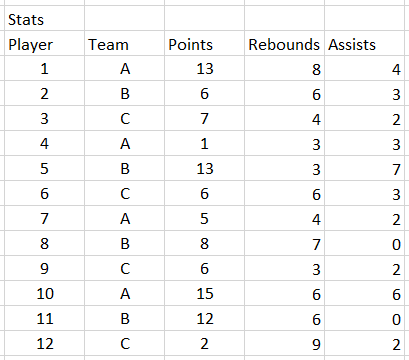
Minimum Assists Query
Find the player with the fewest assists to identify who might need additional training in team play and ball distribution.
Performance Benchmarking
Use minimum values to establish baseline performance metrics and identify areas where the entire team needs improvement.
MIN vs Other Aggregate Functions
| Feature | MIN Function | Other Functions |
|---|---|---|
| Purpose | Find smallest value | Various calculations |
| Return Type | Single minimum value | Depends on function |
| Use Case | Identify lowest performance | Different analysis needs |
MIN Function Best Practices
Ensure the column contains comparable values for meaningful results
MIN function ignores NULL values when calculating the minimum
Find minimum values within specific groups or categories
Apply conditions to find minimums within specific data subsets
Key Takeaways