March 23, 2026/9 min read

Content Marketing: Here's What Works

Proven strategies to rank on Google's first page

Content Marketing Reality Check

Content writing is a long grind, but there are tested strategies that can get articles ranking quickly on Google's first page.

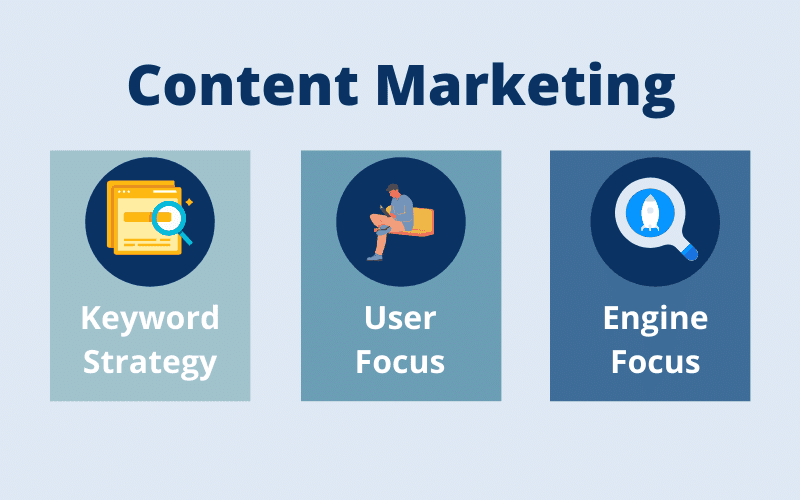
Keys to Content Marketing Graphic

After years of developing content strategies that consistently place articles on Google's first page, I've identified the fundamental principles that separate successful content from the millions of pages competing for attention. Content marketing remains a marathon, not a sprint—but with the right strategic approach, you can accelerate your path to meaningful search visibility and audience engagement.

A. Know Your Audience / Keywords

Every successful business venture begins with a fundamental question: "Who is your audience?" In content marketing, keywords serve as your direct pipeline to understanding exactly what your audience seeks. Consider this scenario: you possess deep expertise in energy sector investments, but keyword research reveals overwhelming demand for technology and growth stock strategies. This data doesn't invalidate your expertise—it highlights a strategic decision point about market alignment versus competitive positioning.

The conventional wisdom of targeting high-volume keywords often leads content creators astray. While search volume indicates demand, the most effective strategy involves identifying keywords with substantial search intent but manageable competition levels. These "goldilocks keywords"—not too competitive, not too obscure—offer your best opportunity to establish ranking authority. In 2026's increasingly saturated content landscape, this strategic keyword selection has become even more critical. Tools like Ahrefs, SEMrush, and Google's Keyword Planner provide the competitive intelligence necessary to identify these opportunities, but the real skill lies in recognizing the commercial and informational intent behind search queries.

Million Dollar Question of Content Marketing

Once you've established your keyword foundation, the transition to creating genuinely valuable content becomes paramount. This brings us to the core principle that should guide every content decision you make.

Keyword Strategy: High Volume vs Low Competition

FeatureHigh Volume KeywordsLow Competition Keywords
Competition LevelHighLower
Ranking DifficultyVery HardModerate
Time to Rank6+ months2-4 months
Best ForEstablished sitesNew content creators
Recommended: Target lower competition keywords to make a splash in rankings faster

Keyword Research Process

1

Identify Your Expertise

Know what topics you can write about with authority and depth

2

Research Search Demand

Use keyword tools to validate that people are actually searching for your topics

3

Assess Competition

Find keywords with decent volume but lower competition to increase ranking chances

4

Match Intent

Ensure your content aligns with what searchers actually want to find

B. Write for the Users

Understanding your audience and their search behavior sets the foundation, but exceptional content execution separates industry leaders from the digital noise. Most content creators fall into the trap of writing for search engines first, users second. This backwards approach produces technically optimized content that fails to engage, convert, or earn the social signals that modern search algorithms increasingly value.

Your audience doesn't seek academic dissertations when searching for solutions on Google. They want accessible, actionable information delivered with clarity and confidence. This means embracing conversational authority—the ability to demonstrate expertise while maintaining approachability. The most successful content strikes this balance by anticipating user questions, addressing pain points directly, and providing immediately applicable insights.

In addition to that foundational approach, I consistently return to one critical question throughout the content creation process:

"What would make this better for the users?"

This deceptively simple question has driven more ranking improvements and user engagement than any technical optimization. Every time I pause to consider this question, the content evolves beyond basic information delivery toward genuine user value. Let's examine the specific improvements that consistently enhance user experience and search performance.

Graphics

While I don't claim expertise as a graphic designer, analyzing high-performing content reveals a consistent pattern: the most shareable, engaging pieces incorporate strategic visual elements that clarify complex concepts or synthesize key information. Visual content processing occurs 60,000 times faster than text processing, making graphics not just nice-to-have additions, but essential components of effective communication.

When applying the "better for users" question, visual enhancement consistently emerges as a priority. Whether creating explanatory diagrams, data visualizations, or content summary graphics, these elements transform dense information into digestible insights. Beyond user experience benefits, I've documented immediate ranking improvements following the addition of optimized images and infographics. Google's algorithm increasingly rewards comprehensive content that addresses user intent through multiple formats. Remember to optimize your visual elements with descriptive alt text and file names that incorporate relevant keywords—this supports both accessibility and search visibility.

Summaries

Modern attention spans and information consumption patterns demand respect for your audience's time constraints. Most Google searchers seek specific answers, not comprehensive treatises. Strategic content summaries—positioned prominently at the beginning of longer pieces—serve dual purposes: they provide immediate value for time-pressed readers while creating multiple entry points for deeper engagement.

Effective summaries distill your core insights into scannable bullet points or numbered lists, allowing users to quickly assess relevance before investing in full consumption. This approach also supports Google's featured snippet algorithm, which frequently pulls well-formatted summary content for position-zero rankings. The summary becomes a content preview that helps users determine their level of engagement, rather than a barrier to accessing information.

Formatting

Content formatting directly impacts both user experience and search engine comprehension. Consider your own behavior when encountering a 2,000-word wall of text—most users abandon immediately, regardless of content quality. Professional content formatting creates visual hierarchy that guides readers through your information architecture while supporting various consumption preferences.

Effective formatting employs strategic heading structures (H2, H3, H4 tags), bullet points for key takeaways, numbered lists for sequential information, and logical paragraph breaks that create visual breathing room. This structural approach benefits search engine crawlers attempting to understand your content's organization and context. Well-formatted content increases the likelihood of earning featured snippets, as Google can more easily extract and display structured information. Think of formatting as the architectural foundation that makes your content accessible to both human readers and algorithmic interpretation.

Headlines

In an information-saturated digital environment, headline effectiveness determines whether your carefully crafted content receives any attention at all. The challenge lies in creating headlines that cut through noise without resorting to manipulative clickbait tactics that ultimately damage user trust and engagement metrics.

Consider search intent when crafting headlines: a user searching for Excel productivity techniques responds differently to "Advanced Excel Techniques" versus "5 Excel Shortcuts That Saved My Career During Remote Work." The second headline provides specificity, emotional connection, and contemporary relevance. Your headline should function as a contract with readers—promising value that your content absolutely delivers. In 2026, with AI-generated content flooding search results, authentic, benefit-focused headlines that reflect genuine human insight become increasingly valuable for capturing user attention.

With user experience optimized, we need to ensure search engines can effectively discover, crawl, and rank our content. This technical foundation supports all user-focused improvements.

What would make this better for the users?
The million-dollar question every content marketer should ask repeatedly while writing

User-First Content Improvements

Graphics & Visuals

Killer graphics make content more digestible and shareable. Quality images can immediately improve search rankings when properly tagged with keywords.

Content Summaries

Bullet-point summaries at the top provide quick value for users who can't digest thousands of words. Makes the full article easier to read.

Strategic Formatting

Good headings, bullet points, and lists make content scannable. Proper formatting also helps Google understand content for snippets.

C. Write for the Engine

Writing for users remains paramount, but search engines require specific technical considerations to effectively surface your content to the right audiences. Think of technical optimization as the infrastructure that allows your user-focused content to reach its intended audience.

Metadata

Metadata serves as your content's first impression in search results—the digital storefront that determines whether users choose your content over competing options. Meta titles and descriptions function independently of your on-page content, requiring separate optimization that balances search engine requirements with user appeal.

When crafting metadata for our Excel productivity article, strategic keyword inclusion becomes essential—"Excel Tricks" or "Excel Shortcuts" should appear naturally within both title and description if those represent our target search terms. However, effective metadata transcends keyword stuffing. Your meta description should function as compelling ad copy that encourages clicks while accurately representing your content's value proposition. Remember that metadata appears directly in search results, making it crucial real estate for conversion optimization. Google's recent algorithm updates increasingly evaluate click-through rates as ranking signals, making compelling metadata both a visibility and ranking factor.

Site Speed

Technical SEO performance significantly impacts both user experience and search rankings, with site speed serving as a critical ranking factor since Google's 2010 algorithm update. This importance has only intensified with Core Web Vitals becoming official ranking signals. I've documented consistent ranking improvements through systematic speed optimization, often seeing position improvements within days of implementing performance enhancements.

My testing methodology involves baseline ranking documentation, speed analysis using tools like GTMetrix or Google PageSpeed Insights, targeted improvements, and re-indexing through Google Search Console. Results consistently show correlation between speed improvements and ranking advancement. Critical speed factors include image optimization, video compression, minimal plugin usage, and efficient hosting infrastructure. While content quality drives rankings, technical performance creates the foundation that allows quality content to compete effectively. In 2026's mobile-first indexing environment, speed optimization has become non-negotiable for competitive search visibility.

Interlinking

Strategic internal linking creates content ecosystems that benefit both search engine crawling and user engagement. Effective interlinking goes beyond random cross-references—it creates logical content pathways that support user journeys while establishing topical authority through connected information architecture.

Using our Excel article example, each productivity tip should link to comprehensive tutorials or related techniques, while those detailed pages link back to the summary article. This bidirectional linking strategy helps search engines understand content relationships and topical expertise while providing users with natural paths for deeper exploration. Strong interlinking also distributes page authority throughout your site, supporting the ranking potential of newer content through established page equity. The goal is creating a content web where users can naturally progress from introductory concepts to advanced applications, increasing engagement time and reducing bounce rates—both positive ranking signals in modern search algorithms.

Technical SEO Considerations

Pros
Site speed improvements show immediate ranking benefits
Metadata optimization helps target specific keywords
Interlinking creates better crawl paths for search engines
Technical optimizations also improve user experience
Cons
Large videos and non-optimized images hurt page speed
Too many tracking tools slow down site performance
Poor metadata means missed ranking opportunities
Weak interlinking reduces content discoverability

Site Speed Optimization Test Process

1

Check Current Ranking

Use incognito mode to check your current search position for target keywords

2

Test Site Speed

Run your page through GTMetrix or similar tools to identify speed issues

3

Make Speed Improvements

Optimize images, reduce tracking tools, or implement other speed enhancements

4

Re-index Page

Use Google Search Console to request re-indexing of your improved page

5

Monitor Results

Track ranking improvements that often appear within days of speed optimizations

Essential Technical SEO Elements

Metadata Optimization

Meta titles and descriptions should include target keywords. This content appears in search results and affects click-through rates.

Site Speed Focus

Fast-loading pages rank better and provide better user experience. Avoid large files and excessive tracking tools that slow performance.

Strategic Interlinking

Link to relevant internal pages and receive links back. Helps search engines crawl your site and keeps users engaged longer.

Recap & Learn More Digital Marketing

Content marketing success in 2026 requires balancing user-focused value creation with technical optimization that ensures discoverability. The strategies outlined here represent fundamental principles that remain effective despite evolving search algorithms and user behavior patterns. Consistent application of these approaches will establish your content's competitive advantage in an increasingly crowded digital landscape.

  • Understand what keywords you are trying to rank for based on volume, competitiveness, and relevance, and optimize towards them strategically rather than mechanically.
  • Always strive to make your content as useful and engaging for users by providing comprehensive value, creating digestible summaries, incorporating relevant graphics, and continuously asking what would improve the user experience.

Want to become a digital marketing expert and learn how to implement more strategies like this? Join us for hands-on digital marketing classes in NYC or live online. We also have a new offering! Join us for our Digital Marketing Certificate program where you'll master digital marketing strategies, SEO, Google Ads, social media, and Google Analytics to take your digital marketing skills to the next level and grow your business.

Happy content marketing!

Content Marketing Action Items

0/6
Content Marketing Success Formula

Combine keyword research, user-focused writing, and technical optimization for articles that rank quickly and provide genuine value to readers.

Key Takeaways

1Target lower competition keywords rather than highest volume terms to rank faster and make an impact in search results
2Always ask 'What would make this better for users?' when creating content to continuously improve article quality and value
3Add quality graphics, summaries, and proper formatting to make content more digestible and improve search rankings
4Site speed optimization shows immediate ranking benefits - test speed, make improvements, re-index, and monitor results
5Strategic interlinking helps search engines crawl your site while keeping users engaged with related content
6Metadata optimization with target keywords is essential for both search engine understanding and click-through rates
7Write headlines that stand out from generic 'Best XYZ' titles by being creative and promising specific value
8Balance writing for users and search engines by focusing on user experience while implementing technical SEO best practices

RELATED ARTICLES