March 23, 2026/5 min read

Why Isn’t My Page Ranking?

Master SEO fundamentals to boost your rankings

SEO Success Requires Multiple Factors

Page ranking depends on technical optimization, content quality, user experience, and strategic implementation across seven key areas.

Core SEO Categories

Content Quality

High-quality, relevant content that engages users and establishes expertise while attracting natural backlinks from other sites.

Technical Optimization

Mobile-friendly design, fast page speeds, proper metadata, and clean URL structures that help search engines crawl effectively.

User Experience

Strategic interlinking, engaging visuals, and intuitive navigation that keeps users on your site longer.

SEO Diagnostic Process

1

Content Audit

Evaluate content quality, relevance, and alignment with user search intent for your target keywords

2

Technical Assessment

Test mobile-friendliness, page speed, and metadata using tools like Google PageSpeed Insights and Search Console

3

Structure Analysis

Review URL structure, internal linking patterns, and visual content integration across your site

Essential SEO Audit Checklist

0/7

SEO Tools Comparison

FeatureGoogle ToolsThird-Party Tools
PageSpeed TestingGoogle PageSpeed InsightsGTmetrix
Mobile TestingSearch ConsoleManual Testing
AnalyticsGoogle AnalyticsThird-party platforms
Site MonitoringGoogle Search ConsoleGTmetrix
Recommended: Combine Google's free tools with selective third-party solutions for comprehensive SEO monitoring
The more natural linking you do across your site, the easier it is for the user to get the right information they need, and the easier it is for Google to crawl your site.
Internal linking serves both user experience and technical SEO by creating logical content pathways

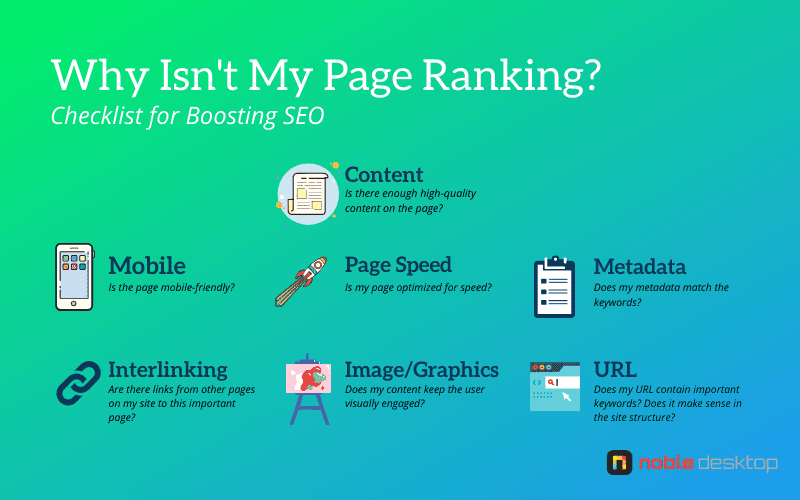
SEO Checklist Graphic

1. Content

High-quality, relevant content remains the cornerstone of effective SEO strategy. Quality content delivers value across multiple dimensions: it engages users, establishes your domain expertise, and naturally attracts backlinks from authoritative sources. The key is creating content that genuinely serves your audience's needs while demonstrating your industry knowledge. For instance, if you operate an online mattress business, develop comprehensive guides comparing memory foam versus hybrid construction, explaining firmness ratings, or addressing common sleep concerns. Remember that content depth matters—Google's algorithms increasingly favor authoritative, comprehensive resources over shallow pages. Additionally, internal content that links strategically to your target pages can significantly amplify their ranking potential. For proven strategies, explore our guide on what works for content marketing.

2. Mobile-friendly

With mobile traffic accounting for over 60% of web searches in 2026, mobile optimization is non-negotiable. Your pages must deliver seamless experiences across all devices and screen sizes. Google's mobile-first indexing means the search engine primarily evaluates your mobile version when determining rankings. Use Google's PageSpeed Insights to assess mobile performance and Search Console to identify mobile usability issues. Pay particular attention to touch-friendly navigation, readable font sizes, and properly sized tap targets. Learn more about essential key tools for search marketing to optimize your mobile presence effectively.

3. Page Speed

Page speed directly impacts both user experience and search rankings, making it a critical component of technical SEO. Slow-loading pages not only frustrate users—leading to higher bounce rates—but also signal poor site quality to search engines. Modern users expect pages to load within three seconds; anything slower significantly hurts conversion rates. Leverage comprehensive tools like GTmetrix, Google Analytics, and Google Search Console to identify performance bottlenecks. These platforms provide actionable recommendations, from image optimization to server response improvements. Focus on Core Web Vitals metrics, which Google explicitly uses as ranking factors. Our detailed guide covers 8 ways to improve site speed with practical implementation steps.

4. Metadata

Strategic metadata optimization serves as your direct communication with search engines, making it essential for on-page SEO success. Your title tags and meta descriptions function as your search result preview, influencing both rankings and click-through rates. Conduct a comprehensive audit of your existing metadata, ensuring each page targets specific, relevant keywords while maintaining natural readability. Title tags should be 50-60 characters, incorporating primary keywords near the beginning, while meta descriptions should compelling summarize page content within 150-160 characters. Remember that metadata should align with user search intent—if someone searches for "best project management software," your metadata should directly address that query with clear, benefit-focused language.

5. Interlinking

Strategic internal linking creates a powerful foundation for both user experience and search engine crawling efficiency. When you naturally connect related content across your site, you're essentially creating pathways that guide users deeper into your expertise while distributing page authority throughout your domain. Focus on contextual relevance—link to supporting articles, related services, or complementary resources that genuinely enhance the user's understanding. This approach helps search engines understand your content relationships and topic authority while keeping visitors engaged longer. Implement a hub-and-spoke model where cornerstone content connects to supporting articles, and ensure your most important pages receive the strongest internal link support from across your site.

6. Images/Graphics

Visual content significantly enhances user engagement and comprehension while supporting your SEO objectives. Well-chosen images, infographics, and visual elements break up text density, making content more digestible and shareable. Modern users increasingly expect rich media experiences, and pages with relevant visuals typically see improved time-on-page metrics and lower bounce rates—factors that indirectly influence search rankings. Optimize images with descriptive alt text, appropriate file names, and compressed file sizes to maintain page speed. Consider creating original graphics, charts, or diagrams that illustrate complex concepts, as these unique visual assets can attract backlinks and social shares, further amplifying your content's reach and authority.

7. URL

URL structure plays a crucial role in both user experience and search engine optimization, serving as an immediate indicator of page relevance and site organization. Clean, descriptive URLs that incorporate target keywords help search engines understand page content while providing users with clear navigation cues. For example, if you're targeting "best email marketing platforms," a URL like /best-email-marketing-platforms/ immediately signals relevance to both users and algorithms. Avoid generic parameters, excessive subdirectories, or keyword stuffing. Instead, create logical, hierarchical URL structures that reflect your site's content organization. Remember that URLs appear in search results and are often shared directly, so they should be readable and meaningful to humans, not just search engines.

Become a Digital Marketing Expert

Mastering SEO requires ongoing education and practical application across multiple digital marketing disciplines. To deepen your expertise and stay current with evolving best practices, explore our comprehensive suite of digital marketing courses in NYC or live online. For professionals seeking intensive, career-focused training, our Digital Marketing Certificate provides hands-on experience across SEO, Google Ads, social media marketing, Google Analytics, and emerging digital marketing technologies. These programs are designed for working professionals who need practical skills that deliver immediate business impact.

Digital Marketing Course Coverage

SEO Fundamentals

Master search engine optimization techniques including technical SEO, content strategy, and ranking factors.

Google Ads Management

Learn paid search campaign creation, optimization, and performance measurement for maximum ROI.

Social Media Marketing

Develop strategic social media campaigns that engage audiences and drive business objectives.

Analytics & Reporting

Use Google Analytics and other tools to measure, analyze, and optimize digital marketing performance.

Digital Marketing Certificate Available

Comprehensive certification program covering SEO, Google Ads, social media marketing, Google Analytics, and more through NYC or live online courses.

Key Takeaways

1High-quality, relevant content remains the most effective way to boost SEO rankings and establish expertise
2Mobile-friendliness and page speed are critical technical factors that directly impact search performance
3Proper metadata optimization ensures titles and tags align with target keywords and industry relevance
4Strategic internal linking improves both user experience and search engine crawling efficiency
5Visual content like images and graphics significantly improves user engagement and search performance
6URL structure should incorporate relevant keywords and follow logical naming conventions
7Multiple diagnostic tools including Google PageSpeed Insights, Search Console, and GTmetrix help identify optimization opportunities
8Comprehensive digital marketing education covering SEO, paid advertising, social media, and analytics creates well-rounded expertise

RELATED ARTICLES