March 22, 2026Noble Desktop/5 min read

Your Brain on Coding

Unlock Your Brain's Potential Through Programming

Breaking Common Myths

Three persistent misconceptions prevent many people from learning to code: believing it takes years to learn, requiring advanced math skills, and thinking it's too late to start as an adult. These are simply myths that neuroplasticity research has debunked.

Common Coding Misconceptions

Years to Learn

Many believe coding requires years of study before becoming useful. In reality, you can build completed applications within weeks of starting.

Advanced Math Required

While some coding areas use math, most programming focuses on logical thinking and problem-solving rather than complex mathematical concepts.

Must Start Young

The belief that only childhood learners become good programmers ignores neuroplasticity and adult learning capabilities.

Neuroplasticity is the brain's remarkable ability to restructure and form new neural pathways at any point in life
This fundamental concept debunks the myth that adult brains cannot effectively learn complex new skills like programming

Old vs New Understanding of Brain Development

FeatureTraditional BeliefCurrent Research
Learning CapacityFixed after childhoodAdaptable throughout life
Skill AcquisitionDifficult in adulthoodPossible at any age
Neural PathwaysStatic after developmentConstantly rewiring
Recommended: Modern neuroscience supports the ability to learn coding effectively as an adult

“It must take years to learn!”
“You need to be REALLY good at math.”
“It’s too late to start coding… the good programmers started when they were kids!”

These statements reflect some of the most persistent myths about learning to code. Yet every day, career changers in their 30s, 40s, and beyond successfully transition into thriving tech careers. What if these widely held beliefs are not just wrong, but actively holding back talented individuals from pursuing one of today's most valuable skill sets?

The answer lies in the concept of neuroplasticity—the brain's remarkable ability to restructure itself and form new neural pathways throughout our entire lives. For decades, conventional wisdom held that our brains were essentially fixed after early childhood, making adult learning a steep uphill battle. This belief has been thoroughly debunked by modern neuroscience.

The scientific community once widely supported age-based learning limitations. The critical period hypothesis in second language acquisition, for instance, suggested that achieving native-like fluency was only possible when learning began in early childhood. However, decades of research have revealed a more nuanced picture: while certain aspects of language learning may be easier for children, adults possess cognitive advantages—analytical thinking, metacognitive awareness, and life experience—that can actually accelerate the learning process.

Contemporary neuroscience shows us that while neuroplasticity peaks during childhood, our brains continue rewiring themselves throughout adulthood. Every new skill we master, from learning a musical instrument to mastering a programming language, creates new neural connections while strengthening existing pathways. This process doesn't diminish significantly with age—it simply requires more intentional practice and engagement.

Think of your brain as an adaptive system rather than a static organ. The more we challenge ourselves with complex, novel tasks, the more our brains respond by developing new capabilities. Research consistently demonstrates that lifelong learning not only enhances cognitive function but serves as one of our most powerful defenses against age-related cognitive decline, including Alzheimer's disease and dementia. In our rapidly evolving economy, this neuroplasticity isn't just beneficial—it's essential for professional relevance.

How does coding exercise our brains?
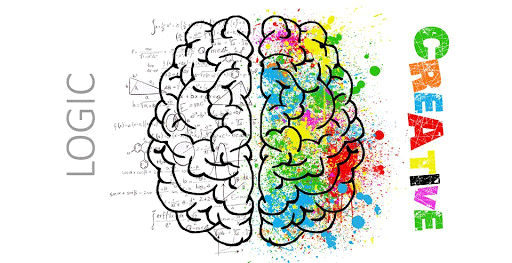
Logic and Creative sides of the brain

Programming presents a uniquely comprehensive cognitive workout, engaging multiple brain systems simultaneously in ways that few other activities can match. When you're coding, you're simultaneously exercising logical reasoning, pattern recognition, creative problem-solving, and systematic thinking.

Your first encounter with code—those screens filled with colorful syntax, brackets, and semicolons—might feel overwhelming. This reaction is completely normal and, in fact, indicates that your brain is actively engaging with genuinely new information. Like encountering any foreign language, initial confusion gives way to recognition, then fluency, as your brain builds the neural infrastructure necessary to process this new form of communication.

What makes coding particularly powerful as a brain exercise is its immediate feedback loop. Unlike many learning experiences where progress is abstract or delayed, programming provides instant validation when your code works—and clear signals when it doesn't. This continuous cycle of hypothesis, testing, and refinement creates an ideal environment for rapid neural adaptation and learning reinforcement.

How Your Brain Adapts to Coding

1

Initial Exposure

When first viewing code with its color-coded syntax, brackets, and semicolons, your brain treats it like a foreign language, activating language processing centers.

2

Pattern Recognition

As you learn coding fundamentals, strange symbols become recognizable patterns, similar to how you developed proficiency in your native language.

3

Neural Restructuring

Behind the scenes, your brain restructures neural pathways to accommodate rapid cognitive growth, strengthening connections through practice.

Brain Exercise Benefits

Exercising your brain through challenging activities like coding is one of the best ways to prevent Alzheimer's disease, dementia, and cognitive deterioration according to multiple studies.

Learn to code! Your brain will thank you.

Committing to intensive coding education triggers measurable cognitive changes within weeks, not years. Modern neuroscience has documented how focused, challenging mental activity rapidly strengthens neural pathways and improves overall brain function. The benefits extend far beyond technical skills:

  1. Daily, measurable progress: Unlike many skills that develop gradually, coding provides clear milestones—from your first "Hello, World!" to building complex applications—creating a powerful feedback loop that reinforces learning and builds confidence.
  2. Collaborative problem-solving: Modern software development is inherently collaborative, fostering communication skills, code review practices, and the ability to break down complex problems into manageable components that teams can tackle together.
  3. End-to-end project experience: You'll gain practical experience in the complete development lifecycle, from initial concept through deployment and maintenance, providing real-world skills that employers immediately recognize and value.

Whether you're a high school student exploring career options or a professional considering a career pivot, structured learning programs can accelerate your journey significantly. Our summer programs for high school and gap year students are offered in a variety of disciplines, from software engineering to full-stack web development and everything in between. Regardless of the program you choose, you’ll spend your summer learning real-world technical skills that will exercise your brain and improve your computational thinking skills—while building a portfolio that demonstrates your capabilities to future employers or college admissions committees. (Not a high school student? We have coding classes for adults, including our Python Bootcamp, Full-Stack Web Development Certificate, and a full suite of web development courses in NYC.)

The cognitive benefits of intensive programming education extend well beyond technical proficiency. You'll develop systematic problem-solving methodologies that apply across disciplines, enhance your ability to think abstractly about complex systems, and build confidence in tackling unfamiliar challenges. These meta-skills prove invaluable whether you pursue a traditional software engineering role, launch a tech startup, transition into product management, or apply computational thinking to fields like finance, healthcare, or scientific research.

In today's interconnected economy, coding literacy has become as fundamental as traditional literacy was to previous generations. The question isn't whether learning to code will benefit your career—it's whether you're ready to invest in developing one of the most versatile and future-proof skill sets available. Your brain, evolved to adapt and grow throughout your lifetime, is ready when you are.

Immediate Brain Benefits of Learning to Code

Daily Skill Improvement

When you devote time to thought-intensive coding tasks, your brain rises to the challenge. You'll see measurable differences in your abilities each day.

Enhanced Collaboration

Coding environments promote collaborative learning where you work with others in ways that are conducive to mutual knowledge sharing and growth.

Complete Project Mastery

You'll gain more than foundational knowledge - you'll develop the ability to build complete applications from start to finish.

Intensive Programming Courses

Pros
Learn real-world technical skills that exercise your brain
Improve computational thinking abilities
Develop critical thinking and problem-solving skills
Become an expert collaborator in technical environments
Gain exposure to multiple technology specialties
Network with talented people from diverse backgrounds
Cons
Requires significant time commitment and mental effort
Initial learning curve can feel overwhelming
Fast-paced environment may not suit all learning styles

Skills You'll Develop Beyond Coding

0/4

Key Takeaways

1Neuroplasticity allows the brain to form new neural pathways at any age, making it possible to learn coding effectively as an adult
2Common misconceptions about coding difficulty, math requirements, and age limitations are not supported by neuroscience research
3Learning to code exercises the brain similarly to learning a foreign language, creating measurable cognitive improvements
4The brain treats code as a foreign language initially, but develops pattern recognition and proficiency through practice
5Brain exercise through challenging activities like coding helps prevent Alzheimer's disease, dementia, and cognitive deterioration
6Intensive coding courses develop critical thinking, collaboration skills, and computational thinking beyond just programming knowledge
7Students can progress from zero coding knowledge to building complete applications in just a few weeks
8Coding education provides exposure to multiple technology specialties and networking opportunities with diverse professionals

RELATED ARTICLES