March 22, 2026 (Updated March 23, 2026)Chad Valencia/5 min read

Python Versus: A Look at the Fastest Growing Language

Understanding Python's Rise Through Developer-Friendly Design Choices

The Python Growth Story

Python has become one of the fastest-growing programming languages by prioritizing developer experience and readability over traditional programming complexity.

The Numbers

Remember learning decimals in elementary school? What seemed like a simple concept—numbers—suddenly became complicated. Whole numbers were rebranded as "integers," while decimals introduced new rules and exceptions. For many students, this added complexity marked the beginning of their discomfort with mathematics, raising the fundamental question: why can't numbers just be numbers?

This mathematical heritage carries directly into programming. Since computer science emerged from mathematical foundations, early programming languages inherited these rigid numerical distinctions. Most languages require you to declare whether you're working with integers (int) or decimals (commonly float, float32, float64, or double) from the outset. Each type has different memory requirements, computational efficiency, and mathematical properties that can significantly impact your program's performance and behavior.

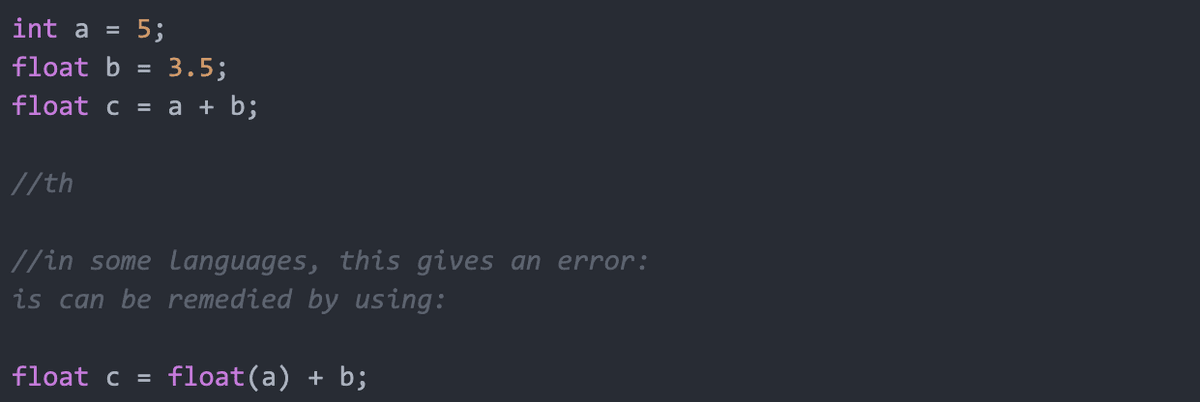
In traditional programming languages like C++ or Java, this numerical precision matters enormously. A banking application that confuses integer and floating-point arithmetic could introduce rounding errors worth millions. Consequently, these languages require explicit type declarations and careful management of numerical types:

Python Numbers Variables

Python takes a radically different approach. In the real world, we rarely distinguish between $100 and $100.00—both represent the same value. Python embraces this practical perspective. Since Python 3's release in 2008, the language has intelligently handled numerical types behind the scenes, allowing developers to focus on solving problems rather than managing data types.

Python Numbers

Python's intelligent number handling represents more than syntactic sugar—it reflects a fundamental philosophy that programming should mirror human thinking rather than force humans to think like machines. This approach has contributed significantly to Python's adoption across industries, from startups to Fortune 500 companies.

Number Handling: Python vs Traditional Languages

FeatureTraditional LanguagesPython
Type DeclarationRequired upfrontAutomatic inference
Integer vs FloatStrict distinctionSimplified as numbers
Variable ChangesType conversion neededSeamless transitions
Everyday UsageMathematical precisionPractical simplicity
Recommended: Python's approach mirrors how we think about numbers in daily life, making it more intuitive for beginners.

Semicolons vs. Spacing

While languages like C++, Java, and JavaScript require semicolons to terminate each statement, Python uses something far more intuitive: line breaks. This seemingly simple change eliminates an entire category of syntax errors—the dreaded missing semicolon that can halt compilation and frustrate developers.

More significantly, Python uses indentation to define code structure, replacing the curly braces ({ }) that other languages employ. This isn't merely aesthetic—it fundamentally changes how developers write and read code. In brace-based languages, indentation is optional and often inconsistent across teams. Python makes proper formatting mandatory, ensuring that code structure visually represents logical structure.

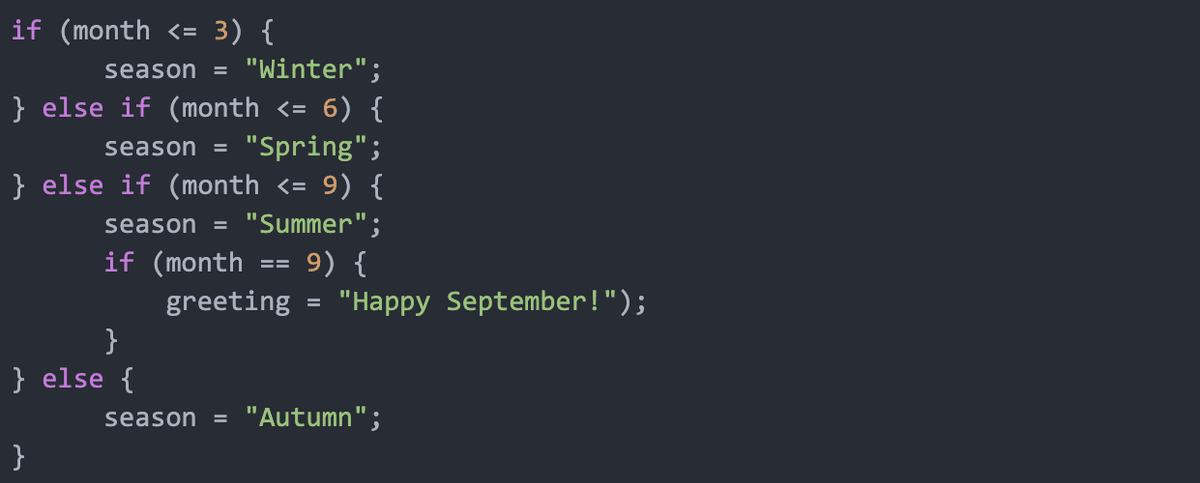
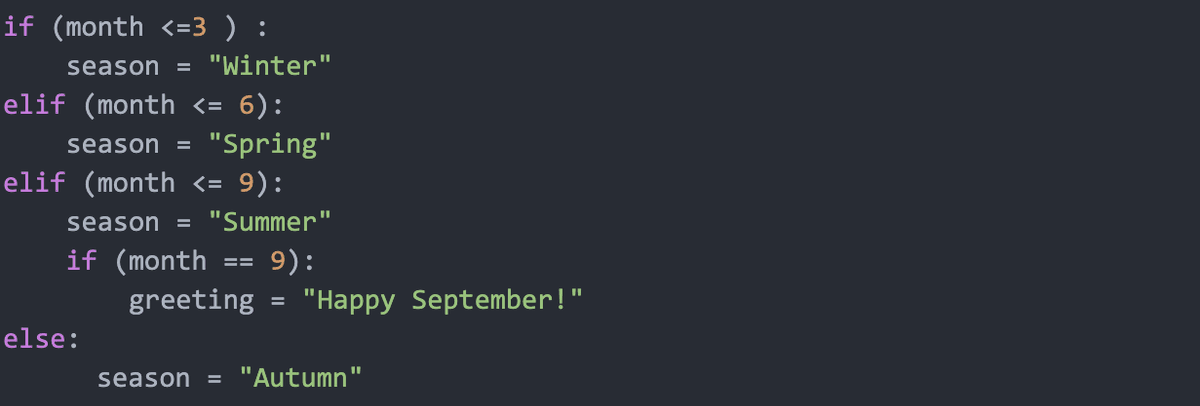
Consider this comparison between JavaScript and Python implementing the same logic:

Python's Indentation-Based Structure

Pros
Eliminates semicolon syntax errors completely
Forces consistent, readable code formatting
Each logical thought gets its own visual space
Reduces visual clutter from braces and semicolons
Cons
Indentation becomes mandatory rather than optional
Mixing tabs and spaces can cause issues
Copy-paste operations require attention to spacing

Code Structure Philosophy

Traditional Languages

Use semicolons to end statements and braces to group code blocks. Indentation is optional and purely for human readability.

Python Approach

Uses line breaks to end statements and mandatory indentation to define code blocks. Structure becomes part of the syntax.

JavaScript:

Python Javascript Semicolon

Python:

Python Spacing

The visual similarity masks a crucial difference in philosophy. In JavaScript, the indentation exists for human readability but doesn't affect program execution. Python's indentation-based syntax makes proper formatting essential for the code to function, creating a symbiotic relationship between readability and functionality. This approach has proven particularly valuable in collaborative environments where code maintenance and debugging are ongoing concerns.

Enterprise development teams report significantly reduced onboarding time for new developers when working with Python codebases, largely attributed to this consistent, enforced formatting standard.

Design Philosophy Impact

Python's design decisions consistently favor human readability and intuitive logic over traditional programming conventions, making it particularly appealing to newcomers without strong mathematical backgrounds.

Iteration

Iteration—repeating operations across datasets—represents one of programming's most fundamental concepts. Traditional approaches often require developers to manage complex indexing systems and manual counter variables. Consider processing a list of student scores:

X = [90,91,93,92,95,94,97,99,75,83,86,92,100,78,20]

In most languages, iterating through this data requires explicit index management. JavaScript, for example, demands careful attention to array bounds and manual incrementing:

Python Javascript For Loop

This approach requires developers to track the loop variable (i), manage array bounds, and handle increment logic—all mechanical details that distract from the core objective of processing each score. The "i++" notation that gave C++ its name reflects this increment-focused mindset.

Python eliminates this mechanical complexity through direct iteration over data structures. Python's lists support natural iteration, allowing developers to focus on data processing rather than index management:

Python Lists

Python extends this simplicity further with list comprehensions—a powerful feature that compresses entire loops into single, readable lines:

Python List Comprehension

This iterator-focused approach has proven instrumental in Python's dominance in data science and analytics. When processing datasets containing millions of records—common in modern business intelligence, machine learning, and financial analysis—Python's intuitive iteration syntax allows developers to express complex data transformations clearly and efficiently. Major tech companies like Netflix, Instagram, and Spotify leverage these capabilities to process massive datasets that power their recommendation engines and user analytics.

Iteration Approaches: Traditional vs Python

FeatureJavaScript/TraditionalPython
Array AccessIndex-based loopsDirect item access
Loop ComplexityManual index managementBuilt-in iteration
Code LengthMultiple lines requiredSingle line possible
Error PotentialIndex out of bounds risksSafe iteration
Recommended: Python's built-in iteration capabilities make data processing significantly more straightforward and less error-prone.

Python's Iteration Evolution

1

Traditional For Loop

Access each item by iterating through array indices, requiring manual index management and increment operations.

2

Python Direct Iteration

Access each item directly from the list without index management, using Python's built-in iteration functionality.

3

List Comprehension

Compress entire loops into single lines of code, making data processing operations extremely concise and readable.

Conclusion

Python's distinctive approaches to numerical handling, syntax structure, and data iteration reflect a broader design philosophy: programming languages should enhance human problem-solving rather than create additional barriers. These syntactic advantages—simplified number handling, whitespace-based structure, and intuitive iteration—reduce cognitive load and allow developers to focus on business logic and creative solutions.

However, syntax represents only part of Python's value proposition. The language's true strength lies in its versatility across application domains. Unlike specialized languages designed for narrow use cases, Python excels equally in web development, data analysis, artificial intelligence, automation, and enterprise applications. This flexibility has made Python the lingua franca of modern software development, with major organizations from startups to multinational corporations standardizing on Python for diverse projects.

Whether you're building web applications, analyzing business data, developing machine learning models, or automating operational workflows, Python provides the tools and simplicity to bring your ideas to life efficiently. Ready to harness this versatility for your career or organization? Explore our comprehensive Python classes to discover how Python can transform your approach to technology and data-driven decision making.

Python's Key Differentiators

Simplified Number Handling

Treats numbers as we do in everyday life, removing the complexity of strict type declarations and mathematical distinctions.

Readable Code Structure

Uses spacing and indentation to create visually clear code that's easy to read and understand at first glance.

Powerful Data Processing

Built-in iteration capabilities and list comprehensions make handling large datasets seamless and efficient.

Beyond Syntax: Versatility Matters

While Python's syntax advantages are compelling, its true strength lies in versatility - seamlessly handling web development, data processing, and business applications within a single language ecosystem.

Key Takeaways

1Python simplifies number handling by treating integers and floats as generic numbers, mirroring everyday usage rather than strict mathematical distinctions
2The elimination of semicolons and use of mandatory indentation makes Python code more readable and reduces common syntax errors
3Python's built-in iteration functionality allows direct access to list items without manual index management, reducing complexity and error potential
4List comprehensions enable complex data processing operations to be compressed into single, readable lines of code
5Python's design philosophy consistently prioritizes human readability and intuitive logic over traditional programming conventions
6The language's syntax advantages make it particularly appealing to newcomers without strong mathematical or programming backgrounds
7Python's versatility across web development, data processing, and business applications makes it valuable beyond just syntax considerations
8Mandatory indentation in Python forces consistent code formatting, making poorly structured code immediately visible and problematic

RELATED ARTICLES