Creativity Meets Code: Teaching Design in the Age of AI
How AI Is Changing Creative Practice
Faster Ideation
AI expands the range of directions a designer can explore before committing to a path.
Prompting as a Skill
Writing effective prompts is now as important as execution in AI-augmented creative workflows.
Curation Over Creation
Selecting and refining AI outputs requires the same design instinct as building from scratch.
Client Transparency
Clear communication about AI involvement is becoming standard in professional design relationships.
Noble Desktop's Generative AI Certificate teaches practical AI fluency — the tools, workflows, and strategic thinking professionals need in an AI-driven world.
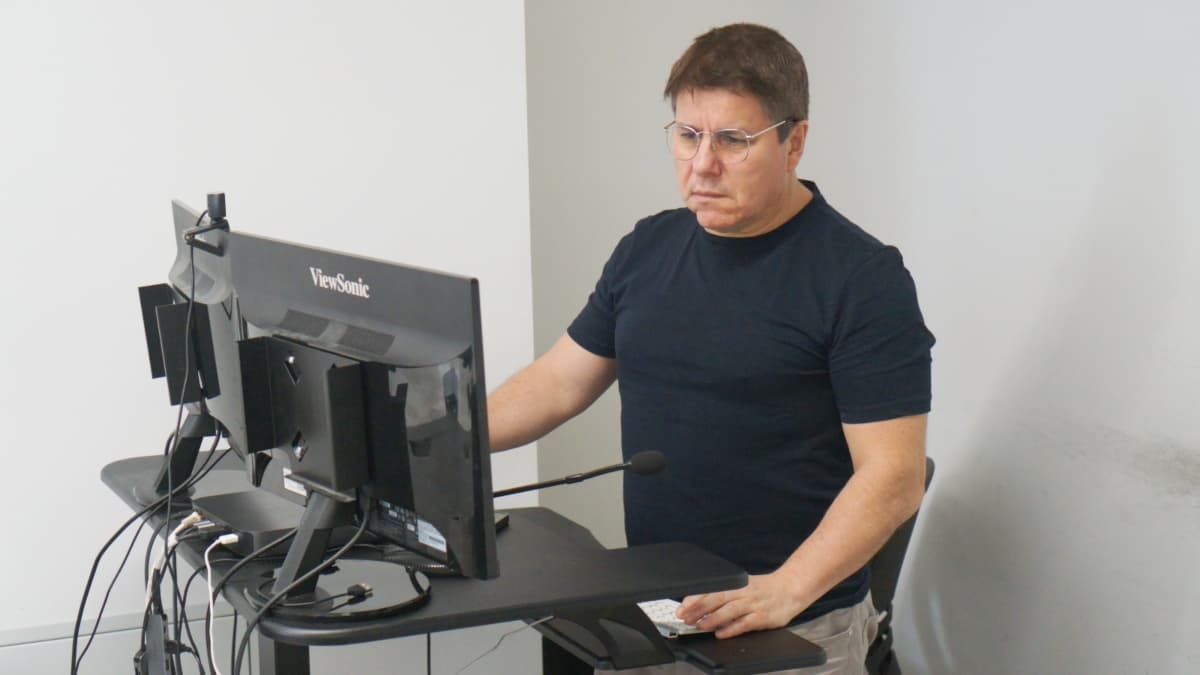
In the world of design, creativity isn’t grown in a vacuum. It’s important to also have a true understanding of the tools that shape that creativity. For Eugenio Solis de Ovando, Senior Instructor at Noble Desktop, design education is about building both.
With over 20 years of experience and a Ph.D. in Artificial Intelligence, Eugenio has a deep understanding of how emerging technologies like AI are transforming the creative process, and how he can leverage his instructional style to help his students grow their confidence in the field. His mission is not only to empower students with software skills, but also the confidence and mindset to think strategically, stay adaptable, and design with intention.

We spoke with Eugenio about how he helps students develop both skill and mindset, the role AI plays in the future of design, and what it takes to thrive in an industry that’s evolving faster than ever.
Q: Hey, Eugenio. It’s great to connect. Let’s just jump right in. What do you want students to walk away with after taking one of your design classes? I don’t just mean skills, but mindset too.
A: By the end of my classes, I want students to achieve cognitive mastery by developing knowledge, skills, attitudes, behaviors, and abilities related to graphic design tools such as Photoshop, Illustrator, and InDesign. At the same time, I help my students to build a creative and strategic mindset that empowers them to make intentional design decisions. In my graphic design course, I guide them through the full branding process, from developing a brand brief and mood board to designing a logo and producing visual assets.
I encourage a culture of continuous practice. Students can retake the class for free, rewatch the recorded sessions, and request one-on-one mentoring to share their personal projects. This allows them to deepen their understanding and get personalized feedback.
Beyond the technical skills, I want them to know they’re not alone, they have my full support and guidance throughout the learning journey. My goal is to help them feel confident using design as a tool to express ideas and build something meaningful.
Q: You’ve got a lot of history with AI. How are you currently incorporating AI tools into your graphic design courses? Any examples of tools or features students are especially excited about?
A: Today, most design software is integrating powerful AI features, and thanks to my background in Artificial Intelligence, I’m able to introduce students to tools that enhance both their creative process and production workflow. For example, Adobe has integrated AI into tools like Firefly and continues to regularly develop and release new features across its software. As an Adobe beta tester, I have early access to these innovations, which allows me to introduce cutting-edge tools to my classes as soon as they are announced. This ensures that my students gain up-to-date knowledge and stay ahead in a rapidly evolving industry.
AI functions not only speed up design tasks but also open up new creative possibilities.
Students are especially excited when they realize they can prototype ideas faster, explore visual variations, and even use different tools like Adobe Firefly or Figma’s AI plug-ins to create concepts from scratch. I also encourage them to reflect on how to use these tools responsibly and strategically, not to replace their creativity, but to extend it.
Q: What’s your perspective on how AI is impacting the design industry? Are there specific skills you believe designers will need to future-proof their careers?
A: In my view, AI is transforming not only the way we work, but also the skill sets and roles within design teams. Just as designers in the 1980s and 1990s had to adapt to the shift from analog to digital tools, and later in the 2000s to designing for both physical and digital platforms, today’s professionals are facing a shift that is just as significant—if not greater. The evolution of roles is already happening, and designers must now understand how to work alongside AI tools to remain competitive.
To future-proof their careers, designers need more than just technical proficiency; they need to develop critical thinking, adaptability, and a strong grasp of how AI can enhance creativity rather than replace it. Familiarity with AI-powered design tools, prompt engineering, and ethical considerations will be essential moving forward.
Q: What upcoming trends or technologies in graphic or web design are you most excited to teach or experiment with in the near future?
A: I love teaching Adobe software like Illustrator, InDesign, and Photoshop, but I also enjoy showing students other tools that can help them be more creative and work faster. I get excited every time I find a new tool that can make the design process easier or more powerful.
I’m always testing and researching new technologies so I can bring fresh ideas to the classroom. My goal is to help students stay up to date and feel confident using new tools as the design world keeps changing.
Q: How do you see the role of the designer evolving over the next five years, and how are you helping your students prepare for that shift?
A: In my opinion, the role of the designer is already shifting, and in the coming years, that change will become even more dramatic.
On one hand, we see niche designers, specialists in specific areas, becoming more productive thanks to AI tools that support their entire creative process. Clients are starting to prefer these focused designers because they deliver faster, more efficient, and high-quality results.
On the other hand, generalist designers now need to be more dynamic and interdisciplinary. They’re expected to contribute across multiple stages of a project, from planning to delivery, while adapting to smaller, more agile teams. The designers who will thrive are those who combine strong creative skills with a solid understanding of AI tools and workflows.
Q: What advice would you give to someone just starting out in design who feels overwhelmed by the number of tools and platforms out there?
A: I always tell beginners not to try to learn everything at once. Start by taking the class and focusing on the fundamentals. Then, at home, follow the step-by-step book, watch the videos, and ask for help when needed. Most importantly, take advantage of the opportunity to retake the class. Many of my students say that the second time around, everything clicks and the learning process becomes much more enjoyable. Learning design is like learning a new language; it takes time, practice, and the right support.
Q: What’s one moment in your teaching career that reaffirmed why you do what you do?
A: I teach students from many backgrounds, some just out of high school, some looking to improve their design skills, and others starting a new career. I help all of them build strong technical skills, but I also mentor them and give advice to help them grow professionally. The best part is hearing back from them when they reach their goals, whether it’s getting a job or starting their own business. That’s what motivates me to keep doing this.
Q: How do you foster confidence in students who may be creatively inclined but technically hesitant?
A: I let students know it’s normal to feel unsure in the beginning. We take things step by step, and I always connect the tools to their creative ideas so they see why it matters. I keep the class environment friendly and low-pressure, and I encourage them to ask questions and practice as much as they need.
I also offer recorded lessons, simple guides, and one-on-one help. When they start to see small progress, they feel more confident. I remind them that technical skills come with practice, they don’t have to be perfect to keep moving forward.
Q: Okay, let’s talk to your future students. For those considering a course in AI for Graphic Design, what would you say makes it different from a traditional design class - and why should they take it now?
A: An AI for Graphic Design course is different because it doesn’t just teach you how to design; it teaches you how to use smart tools that can speed up your work, help you come up with new ideas, and make the whole process more efficient. You still use your creativity, but AI helps you do more in less time.
Now is the right time to learn it, because the design world is changing fast. AI is no longer optional; it’s becoming a required skill. Many design job descriptions already ask for experience with AI tools. Learning it now will give students a big advantage and help them stay competitive in the job market.
Want to see how AI and design come together in real time?
Check out some of our graphic design, Photoshop, InDesign, Illustrator, web design, and WordPress courses at Noble, and learn the tools that are shaping the future of visual communication.
Key Takeaways