March 22, 2026 (Updated April 1, 2026)Makayla Lockett/5 min read

Turning Projects into Pedagogy: An Interview with Artmink Creator Brian McClain

Where Personal Projects Meet Professional Curriculum Development

I don't just know more–I know what matters more.
Brian McClain on how building real-world AI applications has enhanced his teaching approach at Noble Desktop

The Artmink Project: Real-World AI in Action

Visual Analysis Technology

Uses generative AI to help people evaluate antiques through advanced image processing and analysis capabilities.

Curriculum Integration

Serves as the foundation for Noble's Python for AI Apps course, where students build similar chatbots and image analyzers.

Technical Stack

Demonstrates JavaScript-to-Python-Flask integration with OpenAI API connectivity for comprehensive full-stack learning.

A Different Perspective on AI

It's not AI that's going to take your job. It's a Terminator Class Cyborg who uses AI that's going to take your job.

Brian's Teaching Philosophy in Action

1

Build Confidence First

Ensure students walk away with a sense of achievement and feeling they have 'leveled up' regardless of their starting point

2

Focus on Problem-Solving

Emphasize that coding success depends more on analytical thinking and problem-solving skills than memorizing syntax

3

Apply Real-World Context

Use personal projects like Artmink to demonstrate practical applications and industry-relevant implementations

Core Technologies in Noble's AI Curriculum

OpenAI API Integration

Students learn to build AI-powered applications using industry-standard APIs for chatbots and image analysis projects.

TensorFlow-Keras Framework

Machine Learning Level 1 focuses on model training and testing using this popular deep learning library.

PyTorch Development

Advanced Machine Learning Level 2 courses delve deeper into PyTorch for sophisticated AI model development.

Traditional vs Project-Based Learning Approach

FeatureTraditional MethodBrian's Approach
Content SourceTextbook examplesReal personal projects
Student ProjectsGeneric exercisesIndustry-relevant apps
Technology StackAcademic toolsProduction-ready APIs
Learning FocusSyntax memorizationProblem-solving skills
Recommended: The project-based approach provides students with practical experience using real-world tools and solving actual industry problems.

Key Elements of Effective AI Education

0/5

We sat down with Brian to explore how his personal projects drive innovation in Noble's AI and programming curriculum, what he hopes students achieve in his courses, and why coding transcends mere syntax—it's about solving real problems that matter.

Brian McLain Headshot

Q: As a lead course developer, how do you decide which technologies or skills to include in your curriculum to ensure it stays relevant and industry-aligned?

I've increasingly been looking toward my own personal project, Artmink, for guidance on what curriculum to develop next. There's no substitute for hands-on experience when it comes to understanding which technologies actually deliver value in production environments. When you're building real applications that solve genuine problems, you quickly learn which tools are essential and which are just hype.

Q: That's right. You're currently working on Artmink, an app that uses generative AI for visual analysis, helping people evaluate antiques. How has your experience building that shaped your perspective as a teacher and as a user of AI?

My work as an AI/ML Engineer and app developer has fundamentally transformed how I teach. I don't just know more—I know what matters more. When you've wrestled with API limitations at 2 AM or debugged model performance issues in production, you understand which concepts students truly need to master versus what they can learn on the job. As for AI taking jobs, I've come to realize it's not AI that's going to take your job—it's the professional who effectively leverages AI who might. The technology amplifies capability; it doesn't replace critical thinking.

Building Artmink has also given me deep insights into the practical challenges of AI implementation: data quality issues, model bias, computational costs, and user experience design for AI-powered features. These real-world experiences directly inform how I structure learning objectives and project work in my courses.

Q: What do you hope students walk away with after completing one of your courses, especially those new to programming or data?

Regardless of their incoming experience level, I want students to leave with genuine confidence and a tangible sense of achievement—proof that they've "leveled up" their capabilities in measurable ways. But beyond technical skills, the crucial insight I hope they internalize is that programming success isn't about memorizing syntax or frameworks. It's about developing strong analytical thinking and systematic problem-solving approaches.

In today's rapidly evolving tech landscape, the specific tools and languages will continue to change. What remains constant is the ability to break down complex problems, think logically about solutions, and adapt to new technologies. Students who master these meta-skills become resilient, valuable professionals regardless of which direction the industry moves.


Q: How do you introduce students to real-world applications of AI, especially in your machine learning and Python courses?

In both the Python for Machine Learning and Python for AI Apps courses that I developed for Noble, AI applications are woven throughout the curriculum rather than treated as abstract concepts. Students don't just learn about AI—they build functioning AI-powered applications from day one.

In the AI Apps course, we develop a sophisticated chatbot and an image analysis application directly inspired by Artmink's architecture. These aren't toy projects; they're scaled-down versions of production systems that students could genuinely deploy. The technical stack we work with—JavaScript frontend communicating with Python Flask backends, integrated with OpenAI's API—mirrors what students will encounter in professional development environments.

This approach ensures students understand not just how to call an AI API, but how to architect complete systems around AI capabilities, handle error cases, manage API costs, and design user experiences that make AI functionality accessible and valuable.

Q: Are there any tools, platforms, or libraries you've found particularly effective in teaching applied AI or data science?

For AI application development, the OpenAI API remains a cornerstone, though we also explore other platforms to give students a broader perspective on the ecosystem. The key is teaching students to evaluate and integrate multiple AI services rather than becoming dependent on a single provider.

For machine learning model development, we focus heavily on TensorFlow-Keras in our foundational ML course, then advance to PyTorch in our second-level curriculum. This progression gives students experience with both major frameworks while understanding when to choose each. TensorFlow excels for production deployment and scalability, while PyTorch offers more intuitive research and experimentation workflows.

I've also integrated newer tools like Hugging Face Transformers and LangChain, which have become essential for modern AI development. Students need to understand how to leverage pre-trained models effectively rather than building everything from scratch.

Q: Do you use AI-based tools in your teaching, and if so, how have students responded to them?


Students have responded enthusiastically—enough so that my Python for AI Apps class inspired me to create a custom edit of the "Are You Not Entertained?" scene from Gladiator, showing the protagonist conquering entire tech stacks instead of gladiators. It's become something of a class tradition.

More seriously, I leverage AI tools not as substitutes for learning, but as accelerators that help students focus on higher-level concepts. We use AI-assisted code generation to prototype quickly, then dive deep into understanding and optimizing what we've built. This mirrors how professional developers actually work in 2026—using AI to handle routine tasks while applying human insight to architecture, strategy, and creative problem-solving.

The goal is teaching students to be AI-native developers: professionals who seamlessly integrate AI tools into their workflow while maintaining strong foundational knowledge and critical thinking skills.

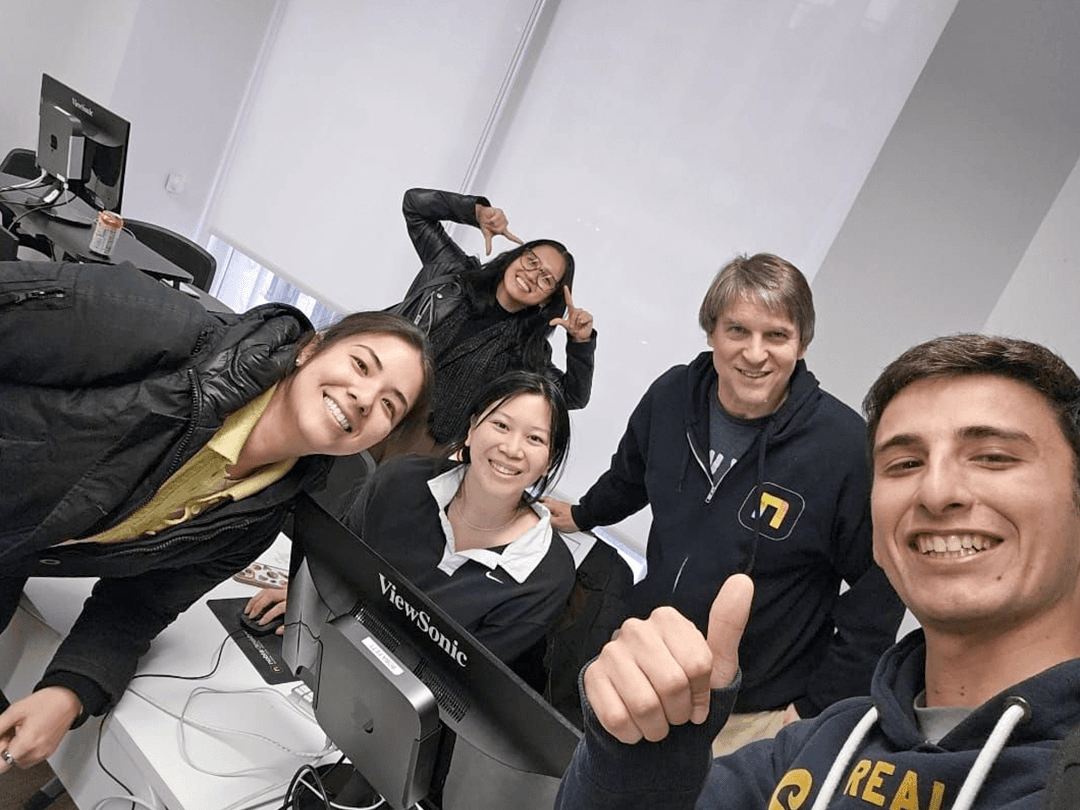
Brian McClain and class

You can view the gladiator scene in question here.

Curious about Artmink: learn more and download the app for free.

Explore Noble Desktop's Python classes and AI classes to gain real-world skills and discover how Brian's innovative, project-driven approach brings cutting-edge AI development practices directly into the classroom.

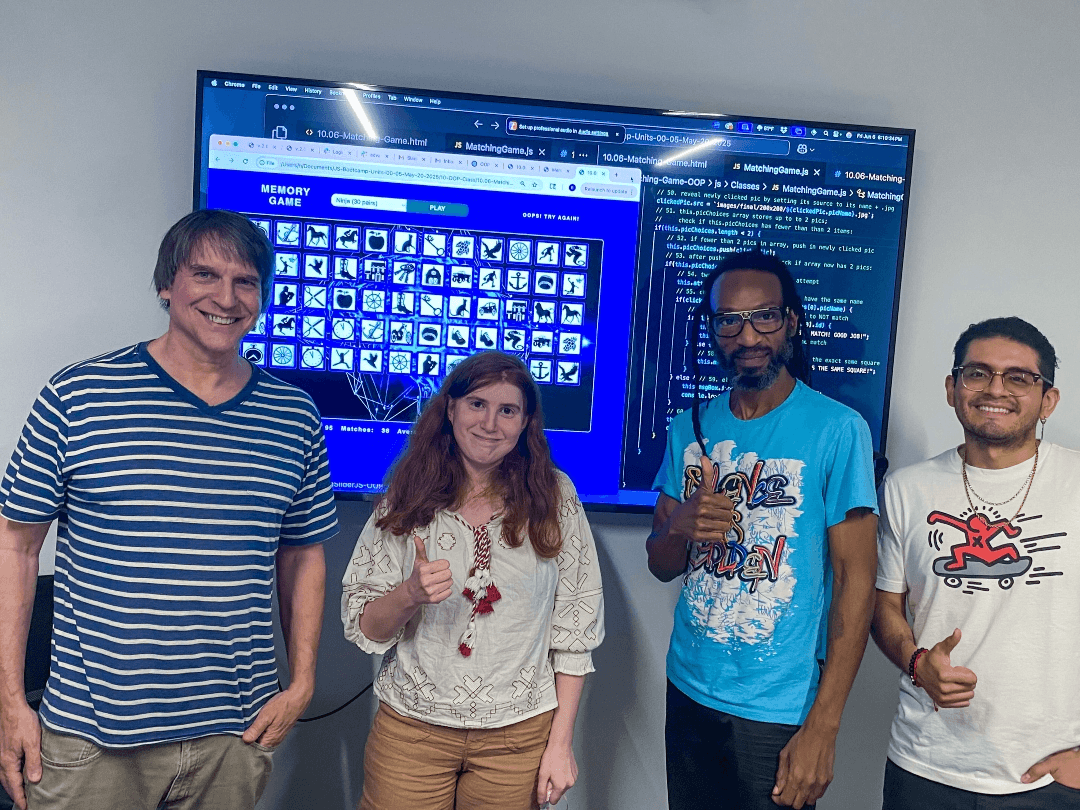
Brian McClain and students

Key Takeaways

1Personal project experience significantly enhances curriculum development by providing real-world context and identifying relevant skills
2Building confidence and analytical thinking skills matters more than technical knowledge memorization in programming education
3The Artmink project demonstrates how personal AI applications can directly inform and improve classroom instruction
4Students respond positively to engaging, entertainment-focused teaching methods that make complex topics accessible
5Industry-standard tools like OpenAI API, TensorFlow-Keras, and PyTorch should be integrated into AI curriculum for practical relevance
6Problem-solving ability is more valuable than syntax knowledge when it comes to coding success
7Project-based learning using real applications provides students with portfolio-worthy experience
8AI education benefits from instructors who actively use AI tools in their own professional development work

RELATED ARTICLES