March 22, 2026 (Updated April 1, 2026)David Karlins/7 min read

A Million Qualified Designers, Only One You

Stand Out in a Crowded Design Market

Your Portfolio's Critical Mission

If a potential employer or client is looking at your portfolio, you already have a foot in the door. Your portfolio is where you seal the deal and truly sell your skills and yourself.

Unnamed4 Unnamed3 Unnamed2 Unnamed1 Unnamed

When assembling your portfolio, step into the mindset of the hiring manager, creative director, or potential client who will evaluate your work. They're reviewing your portfolio because you've already captured their interest through:

  • A compelling recommendation from someone in their network who believes you'd excel in their project or role.
  • An application that demonstrated genuine understanding of their needs and challenges.
  • Professional positioning on LinkedIn, Indeed, Glassdoor, or other platforms that aligned perfectly with their requirements.

Here's the crucial insight: if someone is viewing your portfolio, you've already passed the first filter. You have their attention—now it's time to convert that interest into opportunity.

Your portfolio isn't just a collection of work; it's your closing argument. This is where you transform initial interest into genuine excitement about working with you. In today's competitive creative landscape, where AI tools and design platforms have democratized basic design skills, your portfolio must demonstrate not just technical competency, but strategic thinking, creative problem-solving, and professional maturity.

The reality is sobering: countless designers possess identical software skills and similar training. In 2026, with the proliferation of online courses, bootcamps, and AI-assisted design tools, technical proficiency is table stakes. What separates the memorable candidates from the forgettable ones isn't their mastery of Figma shortcuts or their ability to create pixel-perfect mockups.

So, how do you distinguish yourself in an oversaturated market?

Start with this fundamental truth: there is only one you. Your unique perspective, experiences, and approach to problem-solving cannot be replicated. The challenge lies in effectively communicating this differentiation through your portfolio presentation and project selection.

Begin by strategically curating your class projects alongside independent work (see Collecting Portfolio Content from Day One). As you build this collection, focus on projects that showcase your ability to think beyond the brief—instances where you identified unexpected problems, proposed innovative solutions, or brought fresh perspectives to familiar challenges.

More importantly, your portfolio should reveal your design thinking process through compelling case studies (see Why Your Portfolio Should Emphasize Process, Not Just Content). Today's employers want to understand how you approach ambiguous problems, collaborate with stakeholders, iterate based on feedback, and measure success. They're hiring your brain, not just your hands.

Before finalizing your portfolio, conduct an honest audit: Does this collection communicate not only what you've created, but how you think, what drives you, and the unique value you bring to creative challenges?

Be strategically personal, not overly revealing

3 2 1 0

One of the most effective differentiation strategies involves showcasing passion projects that reveal your creative instincts beyond commercial constraints. These self-initiated works offer employers insight into your creative process when external pressures and client limitations are removed.

Consider including projects that demonstrate your interests and capabilities across different contexts:

  • A documentary photo series exploring urban architecture or community stories?
  • A mobile app prototype addressing a personal frustration or community need?
  • A video project capturing a cause you care about or documenting a personal challenge?
  • Character design, illustration, or storytelling projects that showcase your creative voice?

When selecting these personal projects, maintain professional judgment about what you reveal. Your goal isn't to make employers agree with your political views or personal lifestyle choices—it's to demonstrate the depth and breadth of your creative thinking. Avoid projects that could inadvertently create barriers between you and potential opportunities.

Instead, focus on how these passion projects illuminate transferable skills and creative competencies:

  • A neighborhood photo essay might demonstrate your eye for composition, understanding of visual storytelling, or ability to find beauty in everyday environments.
  • A music-creation app prototype could showcase your understanding of user experience design, audio interfaces, or complex interaction patterns.
  • A personal documentary might reveal your persistence, storytelling abilities, and comfort with iterative creative processes.
  • Character design work could highlight your conceptual thinking, visual development skills, and ability to create memorable, distinctive aesthetics.

These elements become powerful differentiators when they align with the creative challenges your target employers face regularly.

Crafting a memorable first impression with your landing page

Your portfolio's landing page represents your most concentrated opportunity to make a lasting impression and establish your creative identity before viewers dive into individual projects.

The debate over landing page strategy continues to evolve. Minimalist advocates argue for immediate access to work samples—get straight to the craft, skip the preamble. However, a thoughtfully designed landing page can serve as a powerful differentiator that frames how viewers interpret your subsequent work and establishes the creative confidence that employers seek.

A strategic landing page doesn't just introduce your work—it demonstrates your ability to think conceptually, understand audience needs, and create cohesive brand experiences. These skills directly translate to client work and team collaboration.

Let's examine how three accomplished designers have leveraged unconventional landing pages to establish distinctive professional identities. Rather than copying these approaches directly, study how each designer identified their unique strengths and translated them into memorable digital experiences.

Wade and Leta

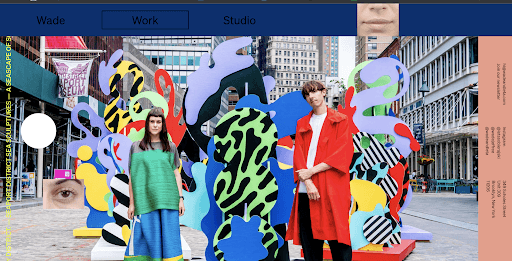
The collaborative design studio Wade and Leta exemplifies how creative partnerships can be showcased through innovative digital experiences. Their animated, interactive landing page immediately communicates their experimental approach and technical sophistication. Leta Sobierajski, the studio's co-founder, has developed acclaimed work for industry leaders including Adobe, Bloomberg Businessweek, Google, Gucci, IBM, The New York Times, Refinery 29, and UNIQLO.

In her detailed interview from the Making the Transition from Design Student to Working Professional series, Sobierajski discusses how their studio's playful, experimental approach attracts clients seeking innovative creative solutions. Their landing page serves as both portfolio piece and client filter.

Unnamed

Leta Sobierajski has worked with clients such as Adobe, Bloomberg Businessweek, Google, Gucci, IBM, The New York Times, Refinery 29, Renault, Target, and UNIQLO
The multi-dimensional design team uses animated, interactive landing pages to make major statements about their approach and capabilities.

Brian LaRossa

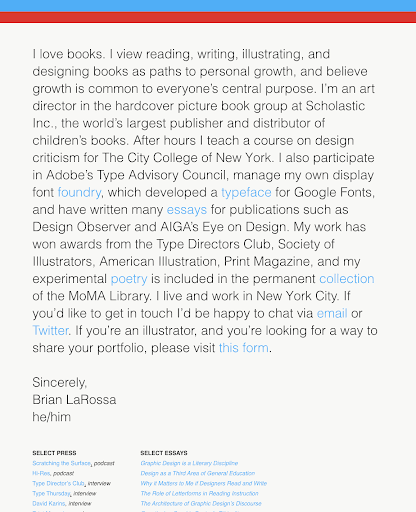
Brian LaRossa has built an impressive career as an art director in major publishing, where conceptual thinking and editorial judgment are paramount. His portfolio takes an unexpectedly literary approach—presenting an essay as the primary landing page content, with integrated links to typography and design projects.

This strategy brilliantly reflects the intersection of his professional world, where text and visual design collaborate to communicate complex ideas. For insights into Brian's career development and industry perspective, explore his detailed conversation about transitioning from student to professional.

77


Unconventional Approach: Essay-Style Landing

Brian LaRossa's portfolio features an essay format landing page that provides thoughtful links to typography and design projects, demonstrating that text-heavy approaches can work for art directors.

Pedro Sanches

Game designer Pedro Sanches created perhaps the most unconventional portfolio landing page—a 3D interactive experience that contained no traditional portfolio materials whatsoever. As he reveals in his interview from the Making the Transition series: "I made this weird 3D website, and it had no portfolio material at all. It was very scrappily done but it ended up being what got me a job at Google."

Sanches' approach demonstrates how taking calculated creative risks can pay enormous dividends. His interactive canvas, where visitors collaborate with his digital scribblings, immediately communicates his understanding of user engagement, experimental technology, and playful interaction design—all crucial skills in game development and digital product creation.

Unnamed 2
I made this weird 3D website, and it had no portfolio material at all. It was very scrappily done but it ended up being what got me a job at Google.
Pedro Sanches proves that highly unconventional, interactive approaches can capture attention and lead to major opportunities, even without traditional portfolio content.

Expanding Your Portfolio Research

Comprehensive portfolio research is essential for understanding current industry standards and identifying opportunities for differentiation. The examples below represent diverse approaches to professional presentation, each tailored to specific design disciplines and career objectives:

4 Strategic Takeaways for Portfolio Differentiation

Standing out in today's competitive design landscape requires more than technical skill—it demands strategic self-awareness and thoughtful presentation of your unique creative perspective. Success comes from identifying what makes your approach distinctive and finding authentic ways to communicate that difference.

  1. Conduct a honest assessment of your unique creative assets — What perspectives, experiences, or approaches do you bring that others cannot replicate?
  2. Weave your distinctive strengths throughout project narratives — Don't just show what you made; reveal how your unique thinking shaped the solutions.
  3. Present your work through a cohesive creative lens — Ensure your portfolio feels like a curated exhibition rather than a random collection of projects.
  4. Consider a conceptual landing page that demonstrates your creative philosophy — When executed thoughtfully, this approach can immediately differentiate you from conventional presentations.

Key Takeaways

1Your portfolio is the deal-closing tool that distinguishes you from equally qualified designers competing for the same opportunities.
2Document and emphasize your unique creative process and problem-solving approach, not just final project outcomes.
3Include carefully curated personal projects that showcase passions and skills while remaining professionally appropriate.
4Consider unconventional landing page approaches like interactive elements, essays, or animated presentations to make memorable first impressions.
5Study successful designers like Wade and Leta, Brian LaRossa, and Pedro Sanches to understand diverse portfolio presentation strategies.
6Balance showing your personality with maintaining professional focus - be multidimensional but strategic about what you reveal.
7Your portfolio should project both the quality of work you produce and who you are as a creative professional.
8Even unconventional or 'scrappy' portfolio approaches can lead to major opportunities if they effectively demonstrate your unique value.

RELATED ARTICLES